.svg)

.svg)

.svg)
.svg)
.svg)
Everything Ontario homeowners need to know about professional roof inspections: what they cover, what they cost, when you actually need one, and how to find a qualified inspector.
What to Expect, When to Get One, and What Actually Gets Checked
A lot of homeowners in the GTA treat their roof the way most people treat their furnace: they ignore it until something stops working. The problem with that approach is that roofing failures rarely announce themselves early. By the time water appears on a ceiling or shingles start turning up on the lawn, the damage has usually been building for months, sometimes years.
A professional roof inspection is the one tool that catches problems while they are still manageable. This guide covers what inspections actually include, when you genuinely need one, how to find someone qualified to do the work, and what to do with the report once you have it.
Why Roof Inspections Matter More in Ontario Than in Most Provinces
Ontario's climate is genuinely hard on roofing materials. The GTA and surrounding areas average somewhere around 30 to 40 freeze-thaw cycles per winter, which means any small entry point for water, such as a cracked sealant joint, a lifted flashing edge, or a missing granule patch, gets worked on by ice expansion every single time temperatures cross zero. Over a season, that is not a slow process. It is aggressive.
Add to that the wet spring periods, occasional summer hail, and the weight of ice accumulation in January and February, and you have conditions that push roofing systems harder than the mild-climate warranties most manufacturers publish assume.
The practical result is that a roof inspection is not optional maintenance in Ontario. It is the thing that keeps a 25-year material from failing at year 14. Understanding why roofs fail early is the context that makes inspection findings make sense.
When Ontario Homeowners Actually Need a Roof Inspection
There is no universal rule here. The right answer depends on the age of the roof, recent weather, and what is happening with the property.
Annual or bi-annual maintenance inspection. For roofs under ten years old and in good condition, a visual inspection every two years is usually adequate. For roofs over 15 years old, once a year is more appropriate. The cost is low relative to the damage that can accumulate between inspections.
After any significant storm. The GTA gets hail events most summers. In 2013 and again in 2018, storms caused widespread shingle damage across Mississauga, Brampton, and Etobicoke. Hail damage to asphalt shingles is often not visible from the ground: the granule loss and mat bruising only become apparent up close. If your area had a hail warning, an inspection within a few weeks of the storm is worth the cost. Insurance companies often require documented damage assessment before they will move forward with a claim.
Before purchasing a home. This is covered in more depth below, but it deserves mention here: a general home inspection does not substitute for a roofing-specific inspection on a property with a roof that is more than eight years old.
Before listing a property for sale. If you are selling, a pre-listing inspection gives you time to address deficiencies before buyers and their inspectors find them. It also gives you documentation to support your asking price and reduces the chance of last-minute renegotiation.
If you notice interior signs. Water stains on ceilings, peeling paint on upper-floor walls near exterior corners, or mold around attic vents are all signals to get the roof checked. Do not wait for the season to change.
What a Professional Roof Inspection Should Cover
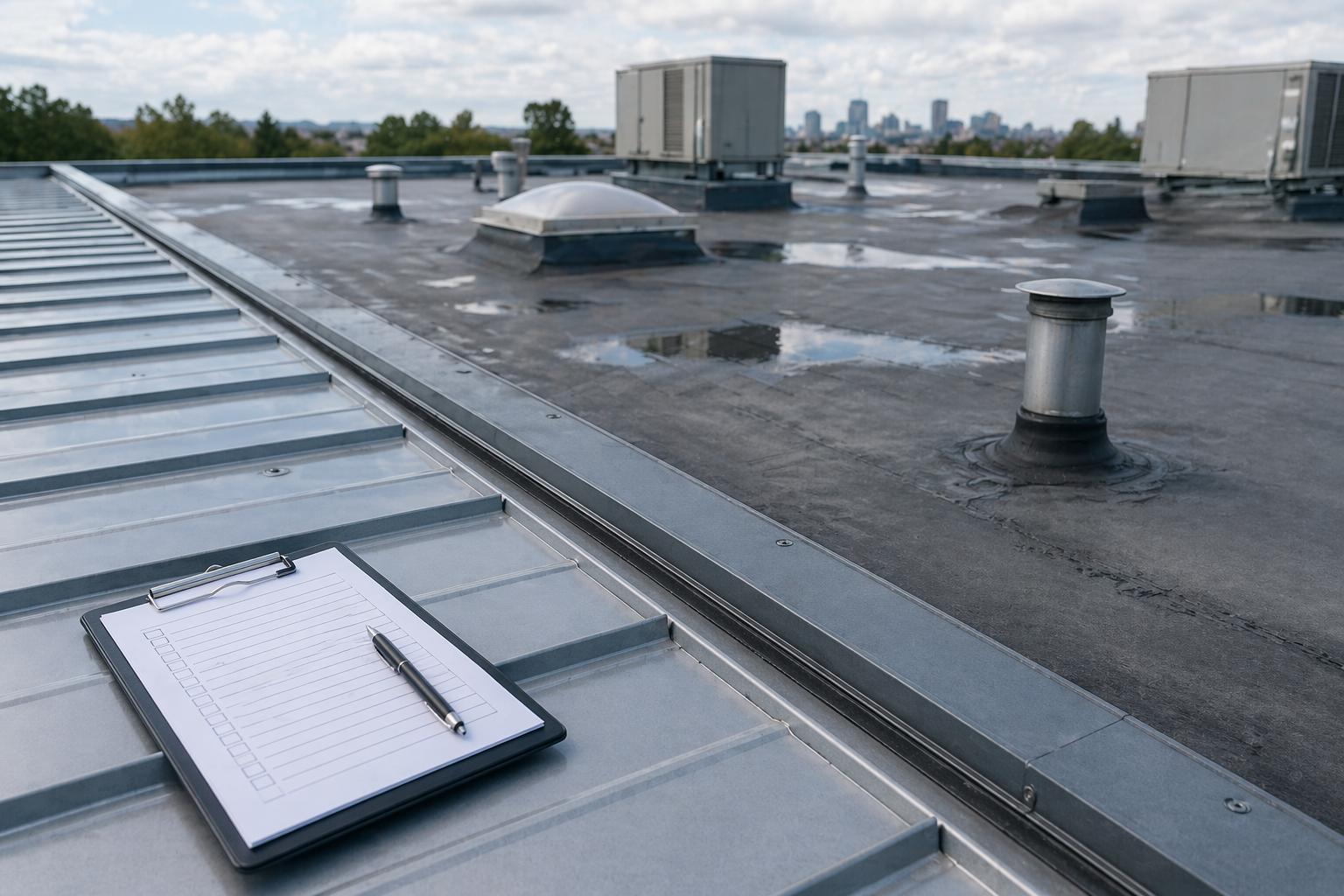
A thorough inspection covers the roof system as a whole, not just the visible surface. If someone is on your roof for twenty minutes and hands you a one-paragraph report, that is not a proper inspection. Here is what a qualified inspection includes.
Shingles or membrane condition. On an asphalt roof, the inspector is looking at granule retention, cracking, curling, and blistering. On a flat roof, they are checking for membrane splits, ponding water areas, seam integrity, and surface oxidation. On a metal roof, they are looking at fastener backout, sealant condition at penetrations, and any surface corrosion around cut edges.
Flashings. Flashings are the metal pieces that seal the transition between the roof surface and anything that interrupts it: chimneys, skylights, vents, walls, valleys. This is where the majority of roof leaks originate. The inspector should check every flashing for separation, rust, improper lapping, and inadequate sealant.
Gutters and drainage. Gutters that are pulling away from the fascia, failing joints, or directing water toward the foundation tell you something about how water is managed at the eaves. Inspectors should note gutter condition and whether downspouts discharge away from the structure.
Soffit and fascia. Rotting fascia or damaged soffit panels can indicate long-term moisture problems at the eave line, often related to ice dam activity or inadequate gutter management.
Attic conditions. This is the part that separates a real inspection from a walk-on-the-roof look. The attic tells you what is happening with ventilation, insulation, and any moisture that has entered the structure. Inspectors should check for signs of condensation on the sheathing, staining from past leaks, adequate soffit-to-ridge airflow, and whether insulation is blocking soffit vents.
Penetrations. Every pipe, vent stack, HVAC curb, and skylight is a penetration. Each one needs a properly installed flashing collar and intact sealant. These fail quietly and are easy to overlook on a quick pass.
Chimneys. Masonry chimneys have their own set of concerns: counter-flashing, step flashing, mortar joint condition, crown condition, and whether the cap is intact. Prefabricated metal chimneys need the storm collar and flashing checked.
Structural condition from below. Where accessible, the inspector should note any sagging, soft spots, or visible deck damage. Deck problems are not always apparent from above.
A written report with photos of every deficiency is the standard deliverable. If a contractor gives you a verbal summary and nothing in writing, that is not an inspection report. It is a sales conversation.
Pre-Purchase Roof Inspections: What Buyers Need to Know
The standard home inspection in Ontario is a generalist service. Home inspectors are trained to evaluate a wide range of systems, which means they are not specialists in any one of them. Most will walk the roof line, look at the visible shingles from the eaves or a ladder, and note the approximate age and general condition.
That is not enough if you are buying a home with a roof that is approaching end of life.
A specialist roofing inspection before purchase costs between $300 and $600 depending on roof size and complexity. On a property with a roof that is 12 years or older, that is a modest investment relative to what you might be taking on. A full replacement on an average Toronto semi runs $15,000 to $25,000. If the roof needs work in the first two years after purchase, you want to know that before you close.
A few practical points for buyers:
- Make the inspection conditional on satisfactory review of the roof. Your real estate lawyer can help structure this if the seller is resistant.
- Ask for the age of the roof and any documentation of past repairs before the inspection so the inspector knows what to prioritize.
- If the inspection reveals significant issues, get a contractor's written estimate before renegotiating. 'The inspector said there were problems' is not a number you can work with at a negotiating table.
- Pay attention to what the seller discloses. In Ontario, sellers have an obligation to disclose known material defects. A history of leak repairs that was not disclosed becomes a legal issue after closing.
Post-Storm Inspection: What to Document for Your Insurance Claim
After a major storm, the first step is documenting conditions before any repairs are made. Insurance adjusters need to see the damage as it was, not after a crew has already started patching.
Take dated photographs from the ground showing the full roof surface and any visible missing or displaced shingles. Photograph gutters, downspouts, and any debris that landed on the property. If there is interior damage, photograph that too before cleanup.
Then contact a qualified roofing contractor for an inspection. Ask specifically for a written damage assessment with photographs that identifies hail impacts, wind damage, or water infiltration. This document is what you submit alongside your claim.
One thing homeowners often miss: hail damage to asphalt shingles frequently does not leak immediately. The granule loss weakens the mat, but water infiltration may not start until the following winter or spring. This is why a post-storm inspection matters even when there are no obvious leaks.
Most insurance policies in Ontario have a time limit for filing storm-related claims. Check your policy, but 12 months is common. Do not wait until the damage gets worse.
DIY Roof Inspection: What You Can Assess Safely and What You Cannot
There is a meaningful difference between what you can observe without getting on the roof and what requires a trained eye up close.
From the ground and from inside the attic, a homeowner can reasonably assess:
- Whether any shingles are visibly missing, buckled, or curling at the edges. Binoculars help here.
- Whether gutters are pulling away from the fascia or have visible rust and joint separation.
- Whether the attic has any daylight visible through the decking (there should be none), any active moisture on the sheathing in winter, or staining from past leaks.
- Whether there are water stains on interior ceilings, particularly in corners where walls meet the ceiling, and near chimneys or skylights.
What you cannot assess from the ground includes granule retention on asphalt shingles, flashing condition at valleys and penetrations, sealant condition around vent collars, and any soft spots or deck delamination. These require being on the roof and knowing what to look for.
If your roof is over 15 years old, if there has been a hail event in your area, or if you are seeing any interior moisture signals, a DIY check from the ground is not a substitute for professional assessment. It is useful context, but it is not the same thing.
How to Find a Qualified Roof Inspector in Ontario
Not everyone who offers to inspect your roof is qualified to give you an accurate assessment. Here is what to look for.
Check for relevant credentials. In Ontario, roofing contractors who employ journeypersons trained under the provincial apprenticeship program have documented technical training. The Ontario College of Trades is the governing body. Not every good contractor goes through this pathway, but it is a useful filter.
Ask whether the inspector carries errors and omissions insurance. This is separate from general liability. It matters for inspections because if the inspector misses something significant and you suffer financial loss as a result, errors and omissions coverage is what you would look to for recourse. Home inspectors in Ontario are required to carry errors and omissions coverage under the Home Inspection Act, but roofing contractors who offer inspection services may or may not.
Look at the report format before hiring. Ask to see a sample inspection report. A good report includes photographs with annotations, a condition rating by component, and a clear summary of what needs attention and when. A report that says 'roof in fair condition, minor maintenance recommended' tells you almost nothing.
Avoid contractors who waive the inspection fee when you hire them for the job. This is common and it creates an obvious conflict of interest. You want an inspection report that reflects the actual condition of the roof, not one that supports a sales outcome.
WSIB and liability. Any contractor going on your roof should be able to provide a WSIB clearance certificate and proof of general liability insurance. This is true for inspections as much as for installation work. If they cannot produce these documents on request, do not let them on your property.
What to Do With the Inspection Report
An inspection report is useful only if you act on what it tells you.
Most reports will prioritize findings into categories. Immediate repairs are items that create active risk of water infiltration or structural compromise. Short-term items are things that should be addressed within the next season or two. Monitoring items are conditions to watch at the next inspection.
Immediate repairs are items that create active risk of water infiltration or structural compromise. If your report puts anything in this category, do not wait for a scheduled replacement project to address it. Get written quotes from two or three contractors before committing, and bring the inspection report to each so they quote against the specific deficiencies listed. This keeps the scope honest.
For short-term items, schedule the work before winter if the inspection is done in fall, or before the next significant storm season. Many GTA roofing contractors are booked 4 to 6 weeks out in spring and early fall. Do not wait until you need it urgently.
Keep the report on file. When you eventually sell the property, documented maintenance history is useful disclosure and adds credibility to your asking price.
If you are not sure whether a finding is serious, call the inspector and ask for clarification. A legitimate inspector will explain their findings without trying to upsell you.
How Seam Roofing Handles Client Roof Assessments
Seam Roofing does not offer standalone inspection services as a separate product. What we do instead is build a thorough assessment into every consultation before any project begins. When a homeowner contacts us about a repair, a replacement, or a question about their roof's condition, our first step is always a detailed evaluation of the full roof system.
That includes everything listed in the checklist above: surface condition, flashings, penetrations, attic, gutters, and any signs of past moisture intrusion. We provide written findings and photographs as part of the consultation process, and we use that documentation to scope whatever work is recommended.
If your roof is older and you are not sure whether you are looking at a repair situation or a replacement, that conversation starts with an honest assessment of what is actually there. You can set up a consultation through our contact page.

.svg)
.svg)