Toronto Roofing Services - Metal, Flat & Shingle Roof Experts
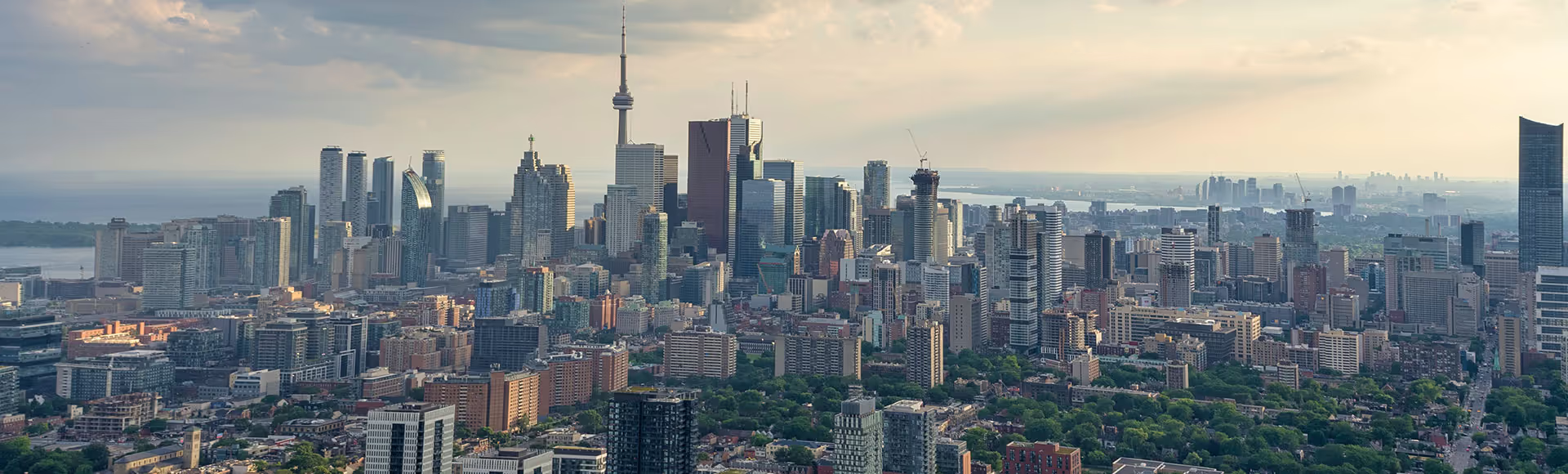
We have worked on a lot of Toronto roofs. Rosedale Victorians where no fastener can be visible from the street. North York flat roofs where drainage is the whole conversation. Lakeshore bungalows where salt air from the lake is a real factor. The city throws a lot at buildings. Over 800mm of rain a year, freeze-thaw cycles running from November through April, and summers that can make an unventilated attic feel like a kiln. We work across all 158 of Toronto's neighborhoods, and those conditions are what we are solving for on every job.
Our team installs metal roofing, flat roofing, and asphalt shingles on residential and commercial properties throughout Toronto. We have worked on heritage homes in Cabbagetown, commercial buildings in the Financial District, low-rise condos in Etobicoke, and everything in between. The architecture changes block by block in this city, which means material decisions and installation details that work in Parkdale will not always be right for a North York new build.
Metal Roofing in Toronto
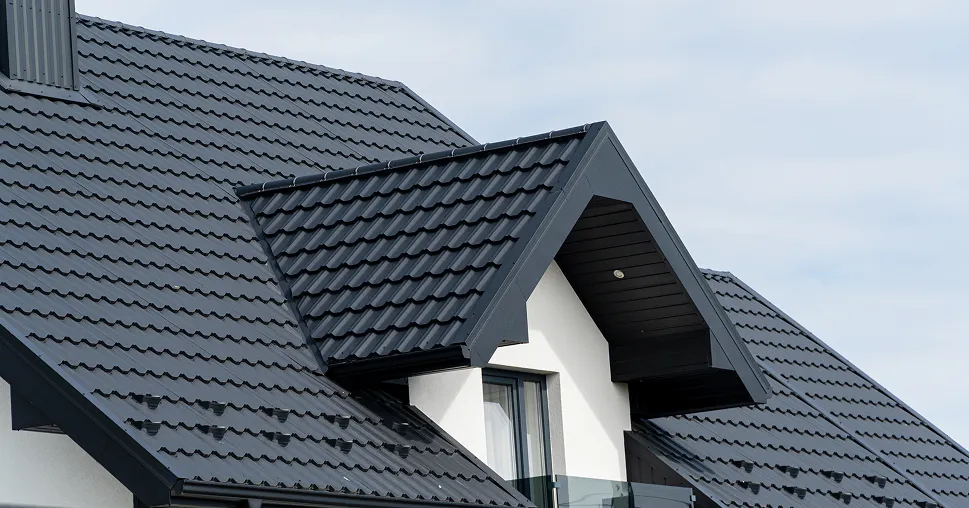
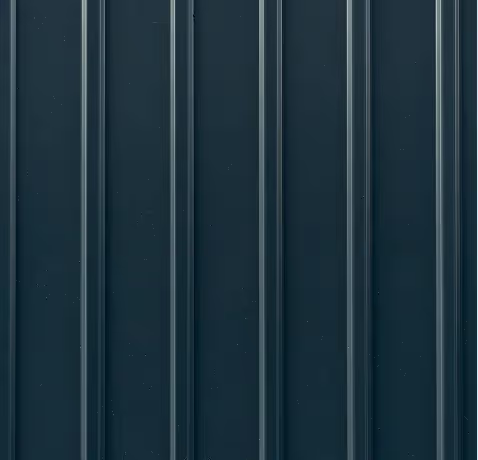
Standing seam metal works particularly well on Toronto's older homes. The proportions suit Victorian and Georgian architecture better than most people expect: clean vertical lines, zero exposed fasteners, and colors that complement century-old brick without looking out of place. In Rosedale and Forest Hill especially, we have seen homeowners go from skeptical to convinced once the job is finished and they actually see it on the house.
For commercial properties in Liberty Village or King West, metal panel systems are a different conversation. Speed matters, disruption matters, and the building needs to keep functioning through installation. We have handled both. Metal shingles are a popular middle-ground option in Leaside and The Kingsway: they look traditional but perform better than asphalt in wind, and the warranties on quality systems now extend to 50 years on materials.
Asphalt Shingles Roofing in Toronto
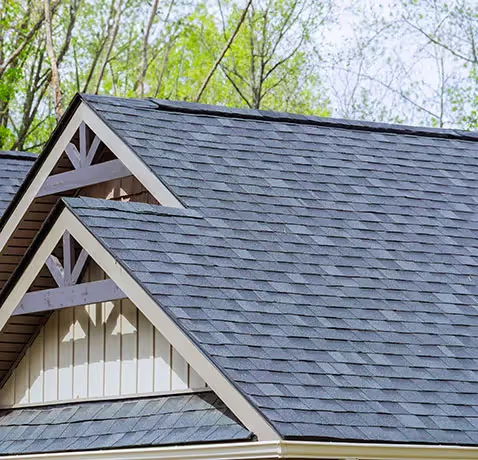
Shingles still make sense for a lot of Toronto homes. They are more budget-friendly upfront, easier to match to existing neighborhood aesthetics, and when installed correctly with the right ventilation, architectural shingles will give you 25 to 30 years in this climate.
Near the lake, in the Beaches, Swansea, and Mimico, we pay closer attention to wind uplift ratings than the product spec sheet suggests you need to. The onshore gusts in those neighborhoods are more consistent than people realize until they have replaced a roof twice. Proper ice and water shield installation matters in Toronto more than the manufacturers' minimums imply. We have opened enough old roofs where it was skimped on to know what that leads to.
For newer developments in Scarborough and North York, designer shingle lines that meet HOA requirements are something we deal with regularly. Color matching to neighborhood standards, documentation for the HOA, the whole process.
Flat Roofing in Toronto
Flat roofs in Toronto are their own category. Older east-end detached homes, commercial buildings in the core, converted factory spaces in the Junction, low-rise condos near Bloor. They all have flat roofs, and they all need different approaches. There is no one-size answer.
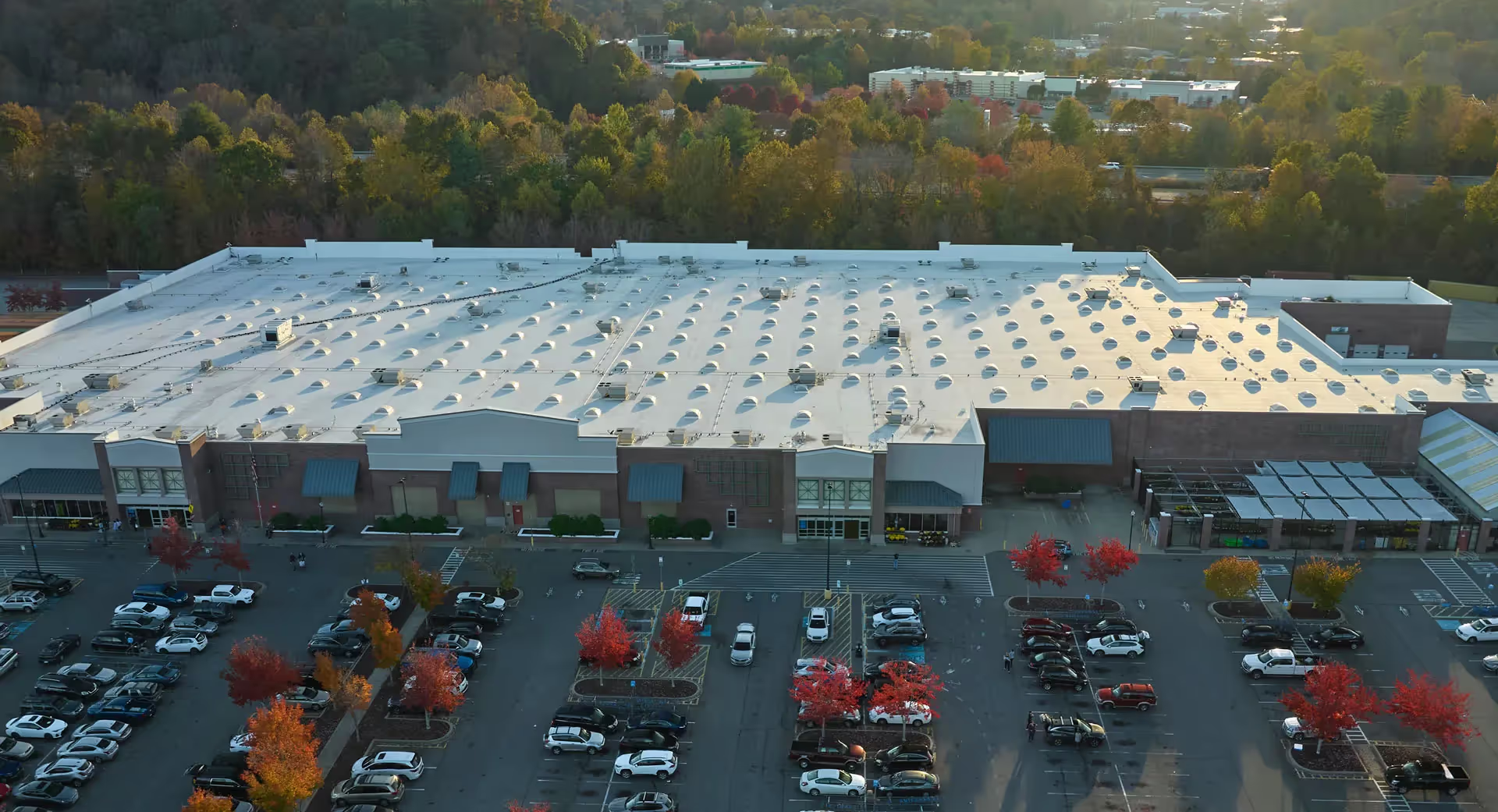
TPO makes sense for commercial properties where energy efficiency matters and the membrane will see foot traffic. Torch-on modified bitumen is often the right call for older residential buildings where the deck is not perfectly level and you need a system that conforms. In the Entertainment District and Queen West, where the urban heat effect pushes surface temperatures up in summer, the reflective properties of white TPO membranes actually move the needle on cooling costs. We have seen building owners track the difference.
For the Junction, Parkdale, and older industrial conversions, we regularly use torch-on on irregular roof decks where a rigid single-ply system would create problems. The building tells you what it needs if you know how to read it.
Roofing Materials for Toronto Homes and Businesses
Toronto's mix of building ages and architectural styles means there is no single right answer to the question of what roofing material to use. A century home in Cabbagetown with a steep gable and red brick has different needs than a 1970s bungalow in Scarborough or a glass-and-steel commercial building downtown.
For heritage properties, we pay attention to how the roofline looks from the street: materials that suit the original proportions, colors that work with the existing exterior, profiles that do not look out of place in a heritage conservation district. For modern builds and commercial properties, performance and energy specifications tend to drive the conversation. We give you an honest recommendation based on the building, not on which product has the best margin for us.
Building Compliance in Toronto
Toronto has its own permitting infrastructure, separate from every other GTA municipality, and it moves at its own pace. Full roof replacements in the city require a building permit filed through the City of Toronto's building portal. For a standard residential re-roofing project, the review process typically runs 10 to 20 business days after a complete application is submitted. Commercial projects take longer. If the project involves structural deck work or any change to the roofline profile, the review can extend further.
Permit fees in Toronto are calculated on declared project value rather than flat rates. For most residential roof replacements in the $15,000 to $25,000 range, the fee runs approximately $150 to $400.
Properties in Toronto's Heritage Conservation Districts require a Heritage Permit in addition to the standard building permit. The Annex, Cabbagetown, Rosedale, Wychwood Park, North Rosedale, and Swansea Village are among the districts where exterior changes including roofing materials and profiles go through the Toronto Preservation Office for review. The process adds four to eight weeks to the project timeline in some cases. If your property is in a designated district, we identify that at the roofing consultation stage, build it into the schedule, and advise on which materials are typically accepted without objection. Standing seam on a Victorian semi in Cabbagetown is not a straightforward approval, but it is not an automatic refusal either. It depends on the profile, the colour, and how the application is framed.
Urban job logistics are the other side of Toronto work that rarely gets discussed before the estimate is signed. Victorian semis and attached rowhouses on 20 to 25-foot lots in the east end, older detached homes in Roncesvalles and Leslieville, and infill construction throughout the inner city all have limited or no staging space. There is often no driveway to receive a delivery, no room for equipment without occupying the boulevard, and no lane access from the rear. Materials move by hand more than they do on a suburban job where a truck can park in the driveway for two days.
Street-adjacent staging in Toronto requires a road occupancy permit from the City's Transportation Services division. Dumpster placement on a public road requires a separate permit, typically $100 to $200. We handle both as part of the project coordination, not as extras that appear on the final invoice.
Mature trees are a factor on many central Toronto properties. Working around an established silver maple or Norway spruce that overhangs the eave line changes how equipment gets positioned and how materials get staged off the truck. We plan for it. Urban infill jobs in Toronto typically run one additional day compared to a comparable suburban project, and our estimates reflect that rather than quoting suburban rates and billing the difference as a change order.
Why Choose Seam Roofing for Your Toronto Property
A few things Toronto property owners ask us consistently:
Are you WSIB registered? Yes, and this matters more than people realize. Under Ontario law, if you hire a contractor who is not WSIB registered and a worker gets hurt on your property, you can be held personally liable for unpaid premiums and injury costs. It is worth checking before you hire anyone.
Are you insured? Yes. $10M commercial, $2M residential. Not because the law requires that specific amount, but because it is the right number for the scale of work we do.
Do you warranty your work? Ten years on labor. Up to lifetime on qualifying materials. We do not sell you a warranty and hope you never need it. Our warranty calls actually get answered, which is how we know our installation standards hold up.
We have been working in Toronto for over 20 years. Most of our jobs come from referrals. When you do roofing properly, that is what tends to happen. We also handle emergency roof repairs in Toronto when something goes wrong: rapid response, not a callback in 48 hours.
Get Your Free Toronto Roofing Estimate
If you are not sure whether you need a repair or a full replacement, that is a normal starting point. We will come out, look at it properly, and give you a straight answer with a written estimate. No pressure, no upselling a replacement when a repair will do.
Call us at (647) 371-0932, email hello@seamroofing.ca, or use the estimate form on the contact page. We typically get back to Toronto inquiries the same day.


.svg)

.svg)

.svg)
.svg)
.svg)

.svg)
.svg)

.svg)
.svg)


.svg)


.svg)
.svg)